
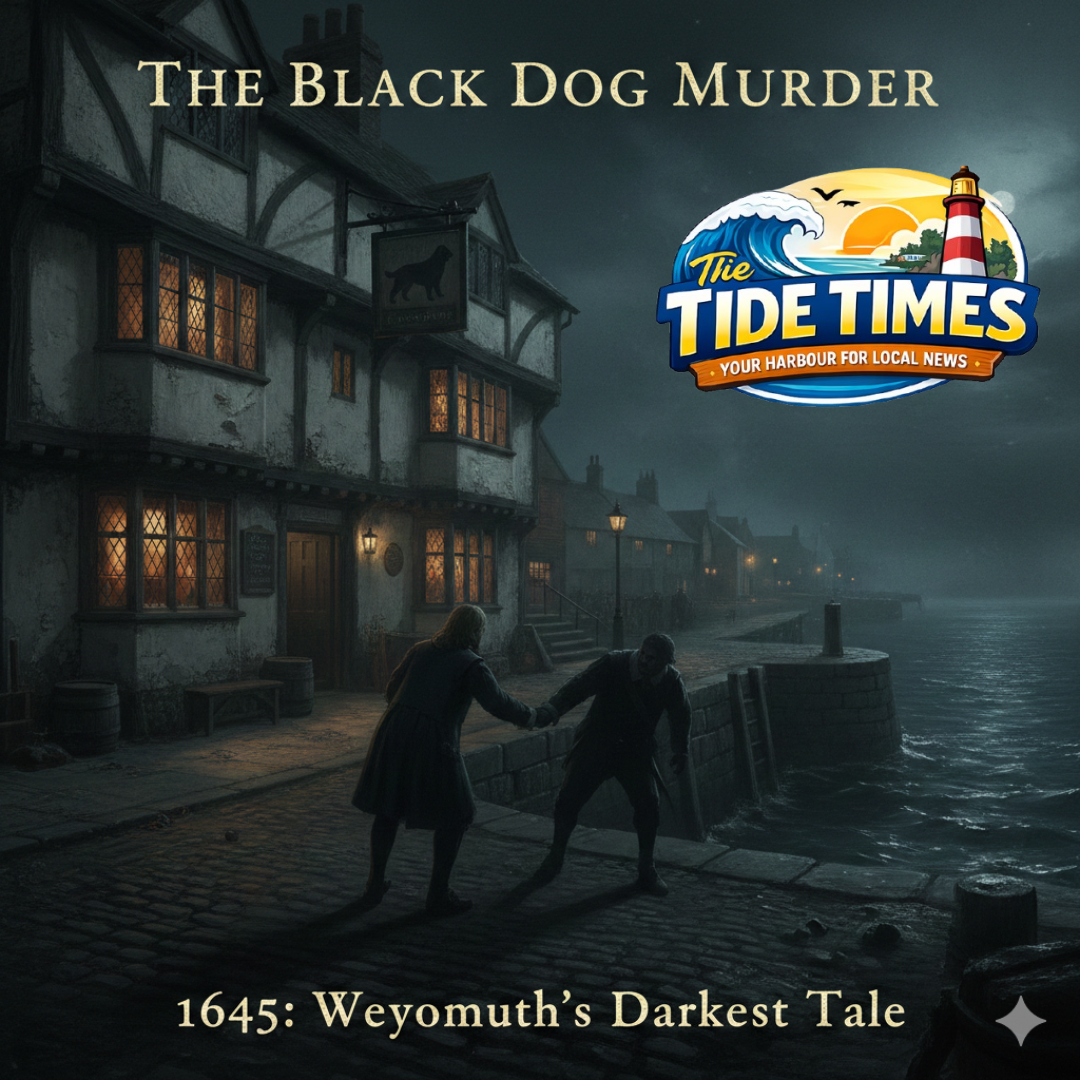
Blood and Beer: The Chilling Tale of Weymouth’s Black Dog Murder
In the heart of Weymouth, where the salty breeze from the Esplanade meets the bustling shops of St. Mary Street, stands a pub with a history far darker than its name suggests.
The Black Dog, widely considered the oldest public house in town, dates back to the 16th century. While it is now a cozy spot for a pint and a quiz night, its walls hold the memory of a 17th-century crime so brutal it remains the town’s oldest recorded murder.
A Guest with Gold
The year was 1645. Weymouth was a town under siege, caught in the violent crossfire of the English Civil War. Royalists and Parliamentarians were locked in a bloody struggle for control of the Dorset coast, and death was a daily occurrence.
Into this chaos walked William Courtney, a trader from Taunton Dene in Somerset. Described in historical records as a man with “flaxen hair and a yellow beard,” Courtney was not a soldier, but he carried something far more dangerous in a war zone: wealth. He arrived at the inn (then possibly still known as The Dove) carrying £288 in gold and £12 in silver—a staggering fortune for the time.
The Landlord’s Betrayal
The landlord of the inn, John Chiles, saw the trader’s gold not as a business opportunity, but as a chance to change his life. As Courtney slept, Chiles entered his room armed with a heavy hammer.
In a single, merciless act of violence, Chiles bludgeoned his guest to death. Along with his wife, Margaret, Chiles stripped Courtney’s body of his clothes and valuables. Under the cover of darkness, they carried the corpse to a nearby jetty and heaved it into the cold waters of the Weymouth harbour.
The Flaw in the Plan
Chiles’ timing was calculated. He banked on the fact that with hundreds of soldiers dying in the Battle of Weymouth, a single body washing up on the shore would be dismissed as just another casualty of war.
He was wrong.
When Courtney’s body was eventually pulled from the water, he was recognized. Suspicions immediately fell on the landlord of the inn where the trader had last been seen. Under the pressure of an official investigation, the partnership in crime crumbled. Margaret Chiles broke under questioning, confessing to the deed and testifying against her husband to save herself. John Chiles was arrested, tried, and ultimately executed for the murder.
The Legacy of the Black Dog
Today, the pub’s name is said to come from a much happier story—a Newfoundland dog brought back from the colonies that became a local celebrity. However, the shadow of 1645 still lingers.
The Hauntings: Staff and patrons over the years have reported strange occurrences, from beer taps turning themselves on to the sound of heavy footsteps in empty rooms.
A Second Murder: Remarkably, this wasn’t the pub’s only brush with death. In 1758, a smuggler named Richard Hawkins was reportedly whipped to death in front of the pub’s fireplace by custom officers, adding another layer to its “chequered” past.
Standing at 3 St Mary Street, the Black Dog remains a testament to Weymouth’s endurance—a place where you can enjoy a modern craft ale while sitting just feet away from the site of a 380-year-old cold-blooded killing.