
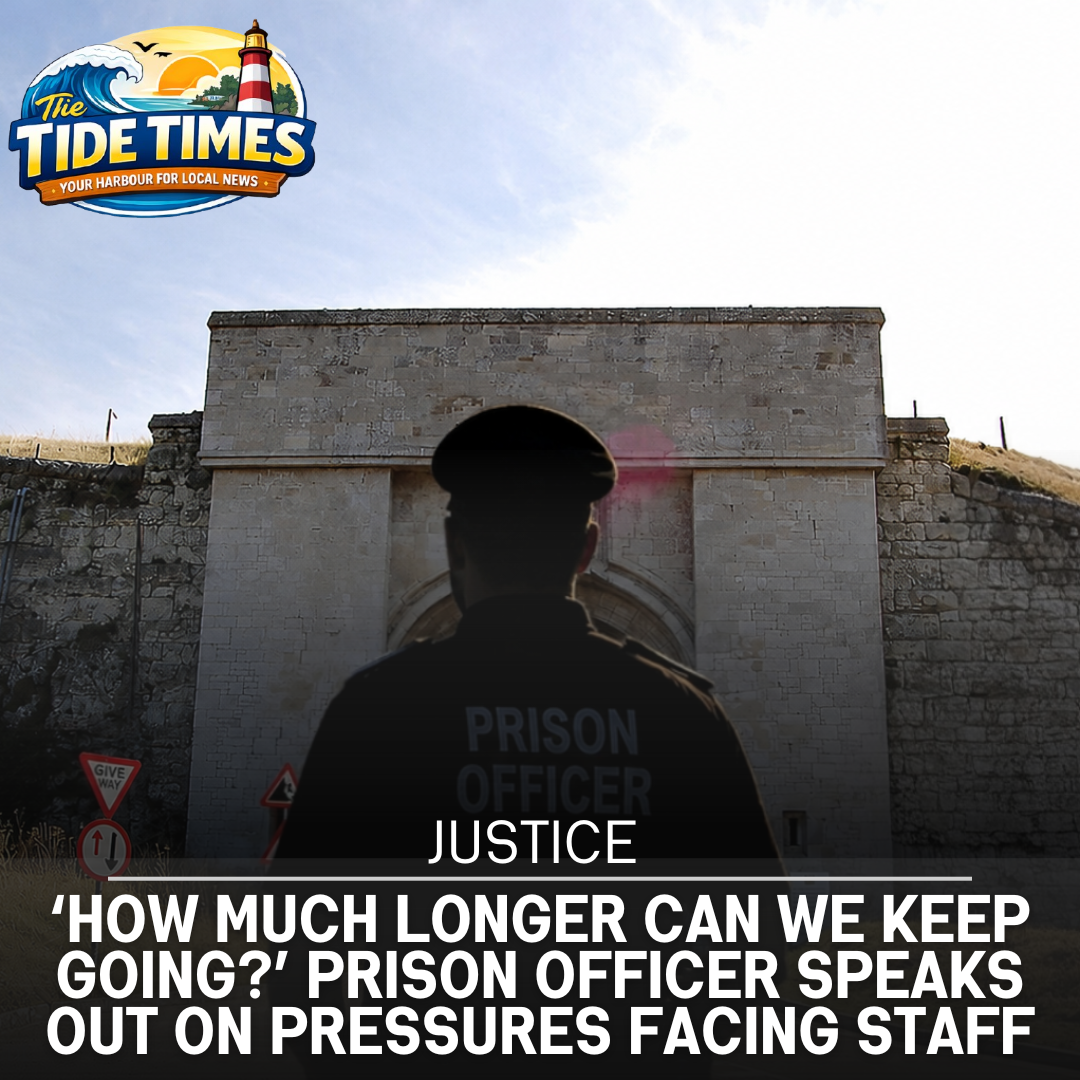
‘How Much Longer Can We Keep Going?’ Prison Officer Speaks Out on Pressures Facing Staff
A frontline prison officer has spoken anonymously about what they describe as a growing crisis within the prison system, warning that staff morale is at “rock bottom” and questioning how long officers can continue working under increasing pressure without meaningful change.
The officer, who works on the frontline in a UK prison, says the public often has a limited understanding of the role prison staff perform on a daily basis.
“Many people think our job begins and ends with locking and unlocking doors,” they said. “The reality could not be further from the truth.”
According to the officer, prison staff face violence, intimidation, mental exhaustion and significant responsibility every day, while coping with staffing shortages and increasing demands.
The anonymous account highlights concerns about burnout among officers, with experienced staff leaving the service and remaining officers being expected to manage increasingly complex challenges.
One of the strongest concerns raised relates to violence against prison staff and the perceived lack of consequences for those responsible.
The officer said many colleagues feel frustrated when prisoners who assault staff or continue to engage in drug-related activity within prisons face what are viewed as insufficient deterrents.
“When assaults occur, officers often feel the process that follows does little to prevent future incidents,” they explained. “That can leave staff questioning whether the system is truly protecting those responsible for maintaining order.”
Alongside concerns around safety, the officer believes prisons should place greater emphasis on purposeful activity and rehabilitation through employment, education and vocational training.
They argued that meaningful work can help develop discipline, practical skills and a sense of purpose, while reducing the amount of unstructured time many prisoners experience.
“Productive employment not only develops skills and discipline but also gives prisoners a sense of contribution,” they said.
The officer also highlighted the diverse range of responsibilities prison staff undertake, many of which are rarely recognised by the public.
Beyond maintaining security and responding to incidents, prison officers are regularly required to administer emergency first aid, support prisoners experiencing mental health crises, help prevent self-harm and suicide, manage complex behavioural issues and act as a point of contact for families.
“In reality, a prison officer combines elements of policing, healthcare, social work, crisis intervention and emergency response,” they said.
Concerns were also raised about pay, safety and support for prison staff.
The officer argued that while police officers rightly receive extensive training, equipment and protection when dealing with dangerous individuals, prison officers often manage many of the same people within confined and highly pressured environments where tensions can escalate rapidly.
Another issue highlighted was what the officer described as inconsistency between different prison establishments, with varying regimes, rules and expectations potentially creating confusion for both prisoners and staff.
They said greater consistency across the prison estate could improve discipline, confidence and safety.
The cumulative impact of these challenges is having a significant effect on staff wellbeing, according to the officer, who pointed to concerns around stress, anxiety, burnout and sickness levels across the service.
Despite the criticism, the officer stressed that most prison staff strongly support rehabilitation and recognise the importance of reducing reoffending and helping people rebuild their lives.
“This is not intended to criticise rehabilitation,” they said. “Most prison officers want prisons to succeed in that mission.”
However, they believe rehabilitation must be balanced with accountability, staff safety and adequate resources.
The officer called for greater investment in meaningful activity for prisoners, stronger responses to violence against staff, improved staffing levels and greater recognition of the work prison officers undertake.
“The public often sees only the prison walls,” they concluded. “Those of us working behind them see a complex society within a society – one that relies on dedicated staff who continue to turn up despite the challenges because they believe in public service.
“The question is: how much longer can they continue doing so without meaningful change?”