
Middle Beach in Studland Faces Rubbish Crisis After Sea Defence Removal
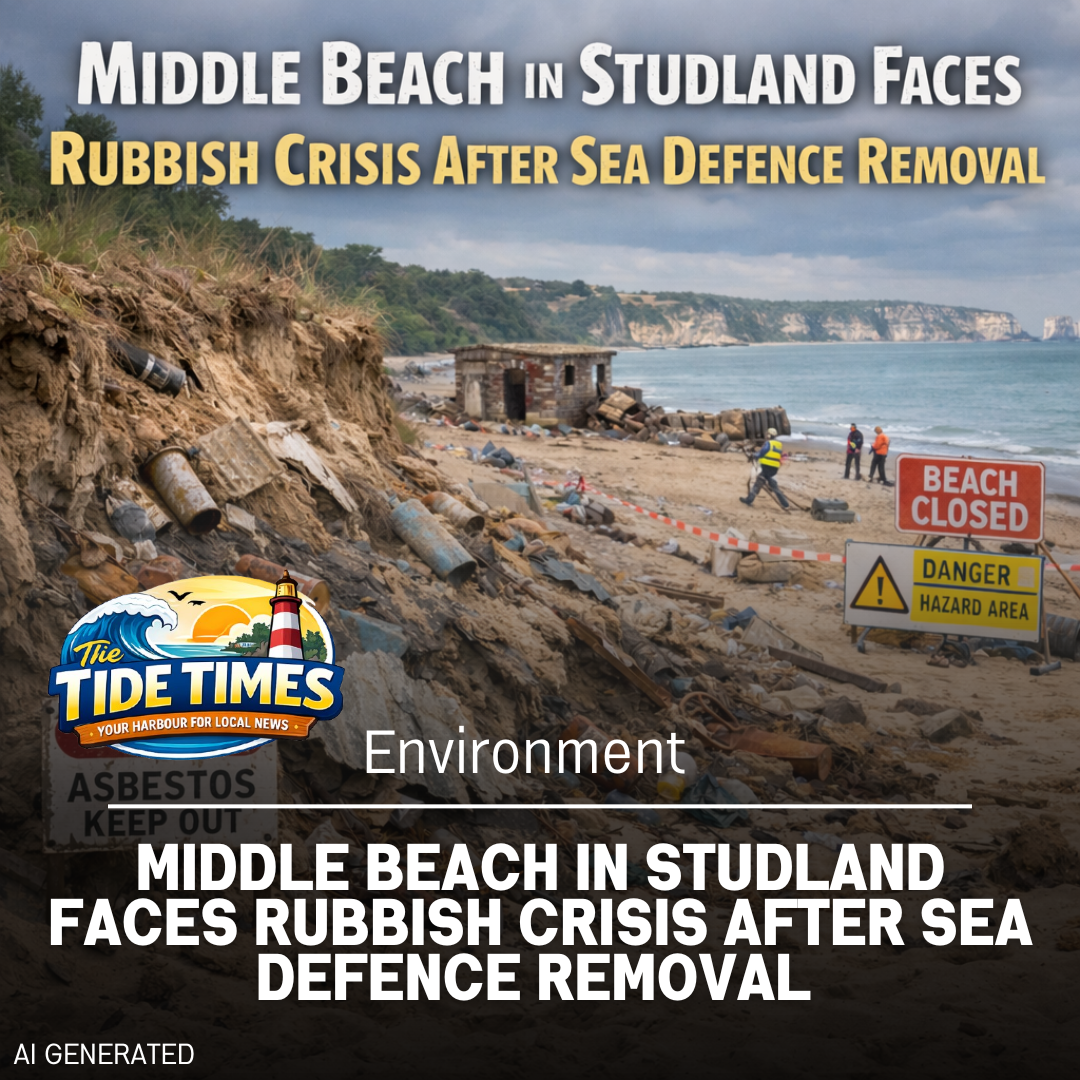
Middle Beach in Studland, one of Dorset’s most cherished stretches of coastline, is facing an environmental and public safety crisis after coastal erosion exposed a long-buried rubbish dump beneath the sand. The problem emerged following the National Trust’s decision to remove sea defences as part of a long-term “managed retreat” strategy designed to allow natural coastal processes to reshape the shoreline.
The beach, which lies within the Studland Bay Nature Reserve and is often associated with Enid Blyton’s Famous Five stories, has seen decades-old waste uncovered by the sea. As tides and storms have eaten away at the sand, a wide range of debris has come to light, including plastic fragments, rusted metal, broken glass, and low-grade asbestos sheeting. Alongside the waste, erosion has also revealed remnants of the area’s past, such as the remains of a Victorian-era toilet block and debris dating back to the Second World War.
Local residents and regular visitors have expressed anger and frustration, arguing that the consequences of removing the sea defences were predictable and could have been avoided. Critics say the trust failed to fully consider what lay beneath the beach before allowing erosion to accelerate, particularly given historical knowledge that parts of the coastline had previously been used for dumping waste. Some locals believe that repairing or replacing the defences would have been a more responsible solution, preventing both environmental contamination and disruption to public access.
Concerns have also been raised about health and safety. The discovery of asbestos-containing materials has prompted warnings about potential risks to beachgoers, particularly families and dog walkers who frequently use the area. As a result, Middle Beach has been closed to the public while assessments and clean-up efforts continue. Warning signs have been erected, and access restrictions are being enforced to prevent accidental exposure to hazardous materials.
The National Trust has defended its approach, stating that managed retreat is a necessary response to climate change, rising sea levels, and increasingly severe storms. According to the trust, maintaining hard sea defences indefinitely is neither environmentally sustainable nor economically viable. It argues that allowing natural erosion will ultimately lead to a more stable and natural shoreline, though it acknowledges this process could take up to 20 years.
In the meantime, the trust says it is working with environmental specialists and local authorities to manage the immediate risks. Volunteers have been carrying out daily clean-ups, carefully removing exposed waste as it appears. However, the trust has admitted that this is a long-term challenge, as further debris may continue to surface as erosion progresses.
The situation has sparked a broader debate about coastal management across the UK, particularly in areas where historic landfill sites lie close to eroding shorelines. As sea levels rise, similar problems may emerge elsewhere, raising difficult questions about who should bear responsibility for past disposal practices and how best to protect both the environment and the public.
**Sources:**
TDPel Media; Swanage News